
Checking Brevard County Criminal History
Begin with the record that can answer the question. The Brevard Electronic Court Application, or BECA, is the main county source for a filed prosecution, its docket, and its disposition. The Brevard County Sheriff's Office is the better first stop for a recent booking or current jail status. A statewide Florida history calls for the Florida Department of Law Enforcement, while prison and state-supervision questions belong with the Florida Department of Corrections. These systems overlap, but none is a complete substitute for another.
Gather the full name, middle name, date of birth when legitimately available, spelling variants, and an approximate event or filing date. A case number is the strongest court identifier. Compare several identifiers before treating a common-name result as the right person, and remember that a missing result can reflect an alias, another county, restricted access, an older archive, or a reporting gap.
- Define whether the target is a court outcome, booking, statewide history, warrant lead, or correctional status.
- Search the matching official portal with a case number or the most precise name details available.
- Compare middle name, dates, agency, and case or booking numbers before identifying a person.
- Open the underlying docket, booking profile, or agency record and read each charge separately.
- Order a certified Clerk disposition or fingerprint-verified personal review when formal verification is needed.
Brevard Record Systems Compared
The same event can leave several records, each controlled by a different custodian. Use this routing table to avoid asking one office for another office's file.
| Question | First source | Best fallback |
|---|---|---|
| What happened to a charge? | BECA and the Clerk | Clerk copy request or counter |
| Was someone recently booked? | BCSO inmate search | Inmate Records or BCSO public-record request |
| What does the Florida repository show? | FDLE CCH Internet | FDLE personal review for one's own record |
| Is someone in state custody or supervision? | FDC Offender Search | FDC records or the sentencing court |
| Is there a federal case? | PACER | Middle District of Florida Clerk |
The Clerk's official home page leads to the county court system.
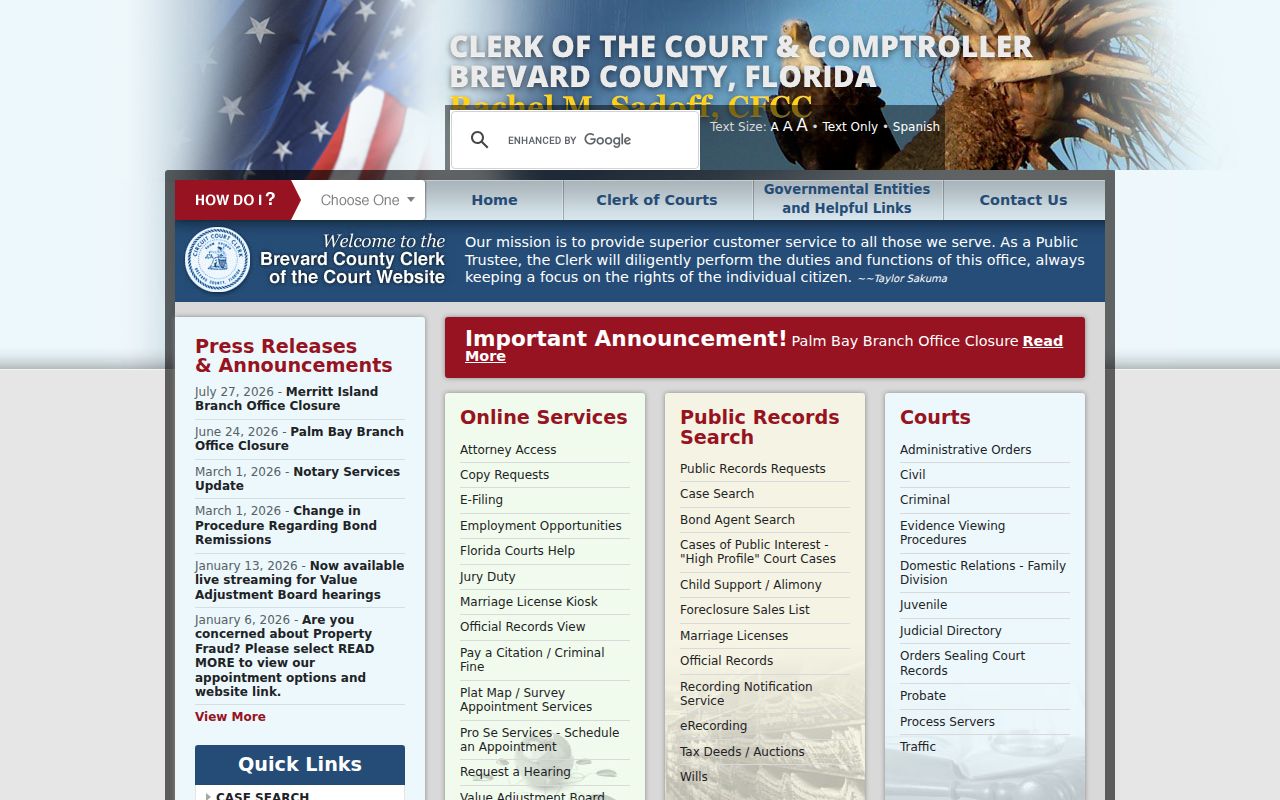
The Clerk source is the proper place to confirm a filed charge and court outcome; it does not replace the arresting agency's narrative report.
Brevard Official Background Checks
The Florida Department of Law Enforcement is the state's central criminal-history repository. Its public CCH Internet product is a demographic name search costing $24 plus the published $1 card-processing fee. A result can include fingerprint-supported Florida arrest cycles and dispositions reported to FDLE, but it is not fingerprint confirmation that the result belongs to a particular person. The FDLE Criminal History Records hub distinguishes public searches, agency-authorized fingerprint checks, and personal review.
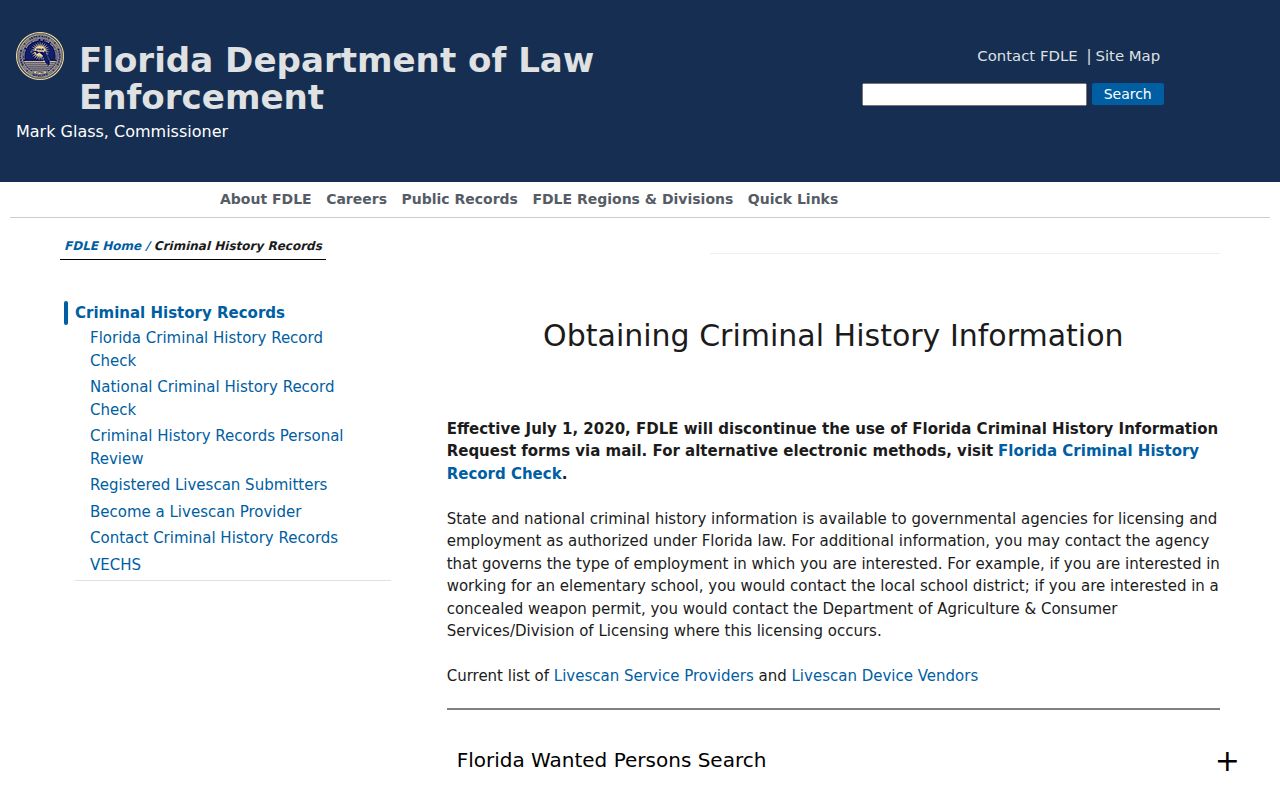
For self-review, FDLE offers a free fingerprint-verified process to the subject or a designated attorney. Statutory fingerprint screening uses Livescan through an approved vendor and a valid originating-agency identifier; it is not a public-purpose code a user selects. The FBI Identity History Summary is another subject-only fingerprint route for nationwide federal submissions.
The direct FDLE CCH Internet search is the public demographic product.
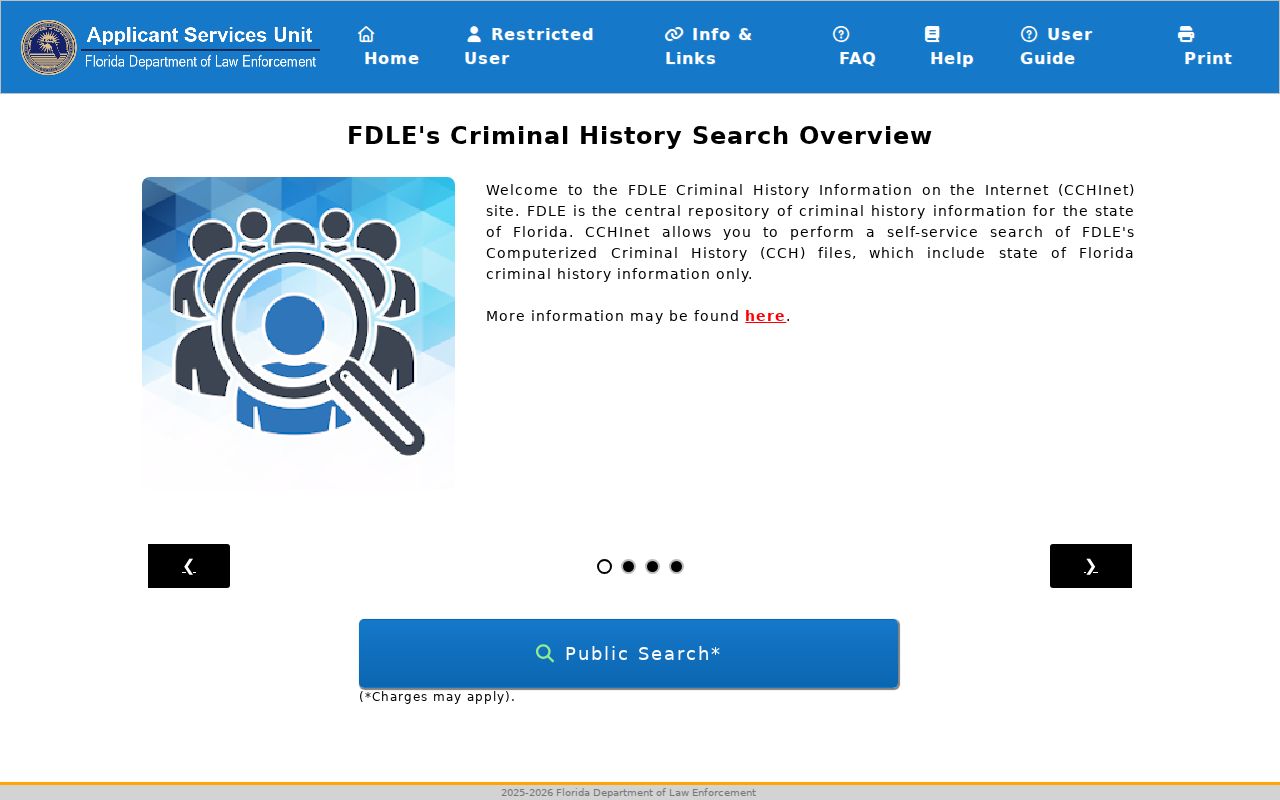
Use its secure fields carefully and compare returned demographics; then confirm a Brevard disposition in the Clerk's case file.
Moore Center or Camp Road?
The Harry T. and Harriette V. Moore Justice Center at 2825 Judge Fran Jamieson Way in Viera handles much of Brevard's Circuit and County Court business. The Jail Complex is a separate sheriff facility at 860 Camp Road in Cocoa. That physical split mirrors the records split: go to the Clerk for a docket, court order, judgment, or certified disposition; use BCSO for a booking, custody, bond, release, or sheriff incident record.
Brevard also conducts court business at the county-seat courthouse at 506 South Palm Avenue in Titusville and the Melbourne Courthouse at 51 South Nieman Avenue. Call the Clerk at 321-637-5413 or Court and Official Records Requests at 321-637-2004 before traveling, because not every division or file is served at every branch. Court security screening and current electronics rules also apply.
Brevard Criminal Record Types
A criminal record is not one universal document. It may be an officer's allegation, a jail intake event, a prosecutor's formal charge, the court's decision, or a state repository entry. The originating agency controls the incident report; BCSO controls county jail records; the Clerk controls filed court material; FDLE compiles qualifying Florida fingerprint submissions; and FDC publishes state custody and supervision information.
- Incident and arrest report: allegations, officer observations, probable cause, and evidence subject to exemptions.
- Booking record: jail intake, initial charges, bond, holds, custody, and release activity—not a judgment.
- Court file: formal charges, docket events, pleas, orders, sentence, and charge-level disposition.
- Warrant or capias: a judicial command carried in law-enforcement systems; public views may be incomplete.
- Repository, corrections, and registry records: purpose-specific state systems that answer different questions.
Brevard Public Request Routing
Brevard County government's request form is for records held by the Board and its departments. The county itself warns that independently elected offices and law-enforcement agencies keep their own files. The county public-record routing page therefore helps identify the custodian rather than serving as a universal criminal-record counter.
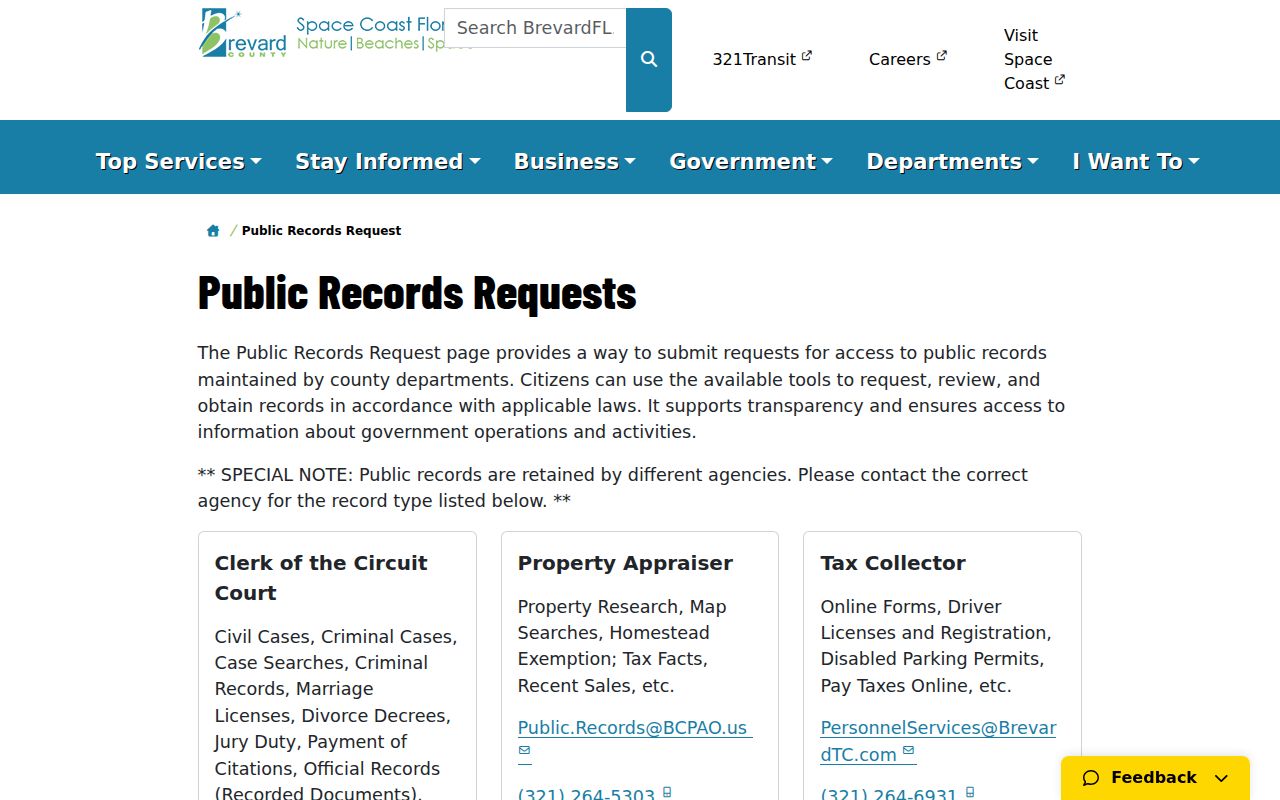
For a BCSO incident or arrest report, supply the incident number if known, date and time range, location, agency, and a narrow description of the product. Florida's Public Records Law does not generally require a name or written request, though contact details may be needed for delivery or a cost estimate. Broad video, audio, email, or high-volume requests can require review, an estimate, and a deposit. A city officer's report belongs with that city police department even if BCSO later booked the person.
Inside a Brevard County Criminal Record
Read each source according to what its fields mean. A booking number identifies one intake episode, a Clerk case number identifies a prosecution, and an FDLE state identifier links repository information. They are not interchangeable. Multiple charge rows can end differently, so a single case-wide label may hide a dismissal on one count and a plea or judgment on another.
| Name & Identifiers | Names, aliases, demographic match points, and source-specific case, booking, or state numbers. |
|---|---|
| Arrest / Booking Data | Arresting agency, intake time, delivered charges, bond, holds, and release activity. |
| Charges & Statutes | Charge description, degree or class, statute or ordinance, and offense date when reported. |
| Disposition | The outcome of each charge, such as dismissal, acquittal, nolle prosequi, or conviction. |
| Sentence | Confinement, probation, financial obligations, restitution, or other ordered conditions. |
| Custody / Supervision | Current jail status or FDC prison/community-supervision status, depending on the source. |
Correcting a Missing Brevard Disposition
An FDLE record without a linked outcome does not necessarily mean the Brevard case remains pending. First obtain a fingerprint-verified FDLE personal review rather than relying only on a public name-search screen. Identify the arrest cycle and the missing or inaccurate entry, then obtain the certified Brevard disposition from the Clerk. FDLE may direct the subject to the arresting agency or court that contributed the event before its repository can be corrected.
FDLE's personal review and challenge process is free, although a fingerprint location may charge for capture. The agency accepts supporting material and questions through its published challenge channel. Correction changes inaccurate or incomplete data; sealing or expunction is a separate court remedy. One does not substitute for the other.
Brevard Record Access Laws
Florida's constitutional and statutory policy favors access, but criminal justice files still contain protected material. Custodians review active investigative information, juvenile records, confidential victim information, Marsy's Law details, medical data, personal identifiers, and remote court images restricted by the court-record access standards. Redaction of protected portions does not automatically close every nonexempt part of a record.
Key Statutes:
Florida Statutes chapter 119 — governs inspection, copying, fees, exemptions, and public-record requests.
Section 943.053 — controls dissemination of criminal-history information maintained by FDLE.
Section 943.0585 — sets Florida's court-ordered expunction framework.
Section 943.059 — addresses court-ordered sealing.
Brevard Warrant Search Limits
The FDLE Public Access System publishes a wanted-person subset updated on the agency's daily cycle.
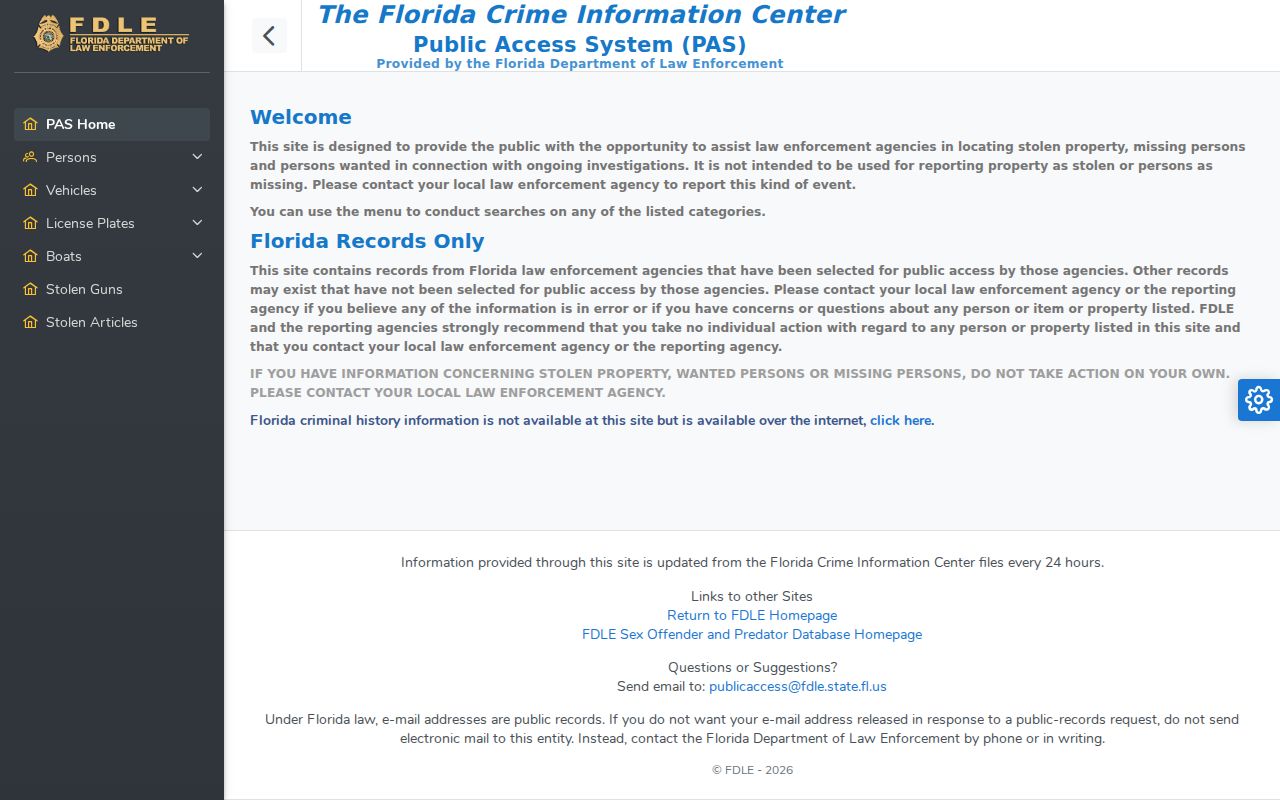
A match is a lead, not warrant clearance. Note the reporting agency and warrant or case number, then contact that agency or issuing court through an independently verified official number. BECA may show a capias or bench-warrant event in the case chronology, but sealed warrants and operational FCIC or NCIC data are not guaranteed to appear. Brevard Administrative Order 18-21-B-003 provides an alternative process for certain qualifying misdemeanor warrants or capiases; its exclusions matter, so it is not a universal amnesty.
Brevard Restricted Criminal Records
Florida sealing restricts ordinary public access while an expunction generally removes the record from ordinary access subject to narrow statutory retention and disclosure rules. Neither happens merely because a charge was dismissed. Eligibility turns on the complete history, the disposition, prior relief, and statutory exclusions. The usual sequence begins with an FDLE certificate-of-eligibility application, then a petition in the court that handled the case if FDLE issues the certificate.
The FDLE certificate step can take about 12 weeks according to the state guidance, and a certificate does not guarantee that the court will grant relief. Juvenile material, active investigative information, protected victims, sealed cases, and security-matrix-limited court images may already be unavailable to an ordinary public search for different legal reasons. A blank public result should never be treated as proof that no underlying contact existed.
Brevard State and Federal Records
County court and jail searches stop at jurisdictional borders. The Florida Corrections Offender Network addresses state prison and community-supervision records.
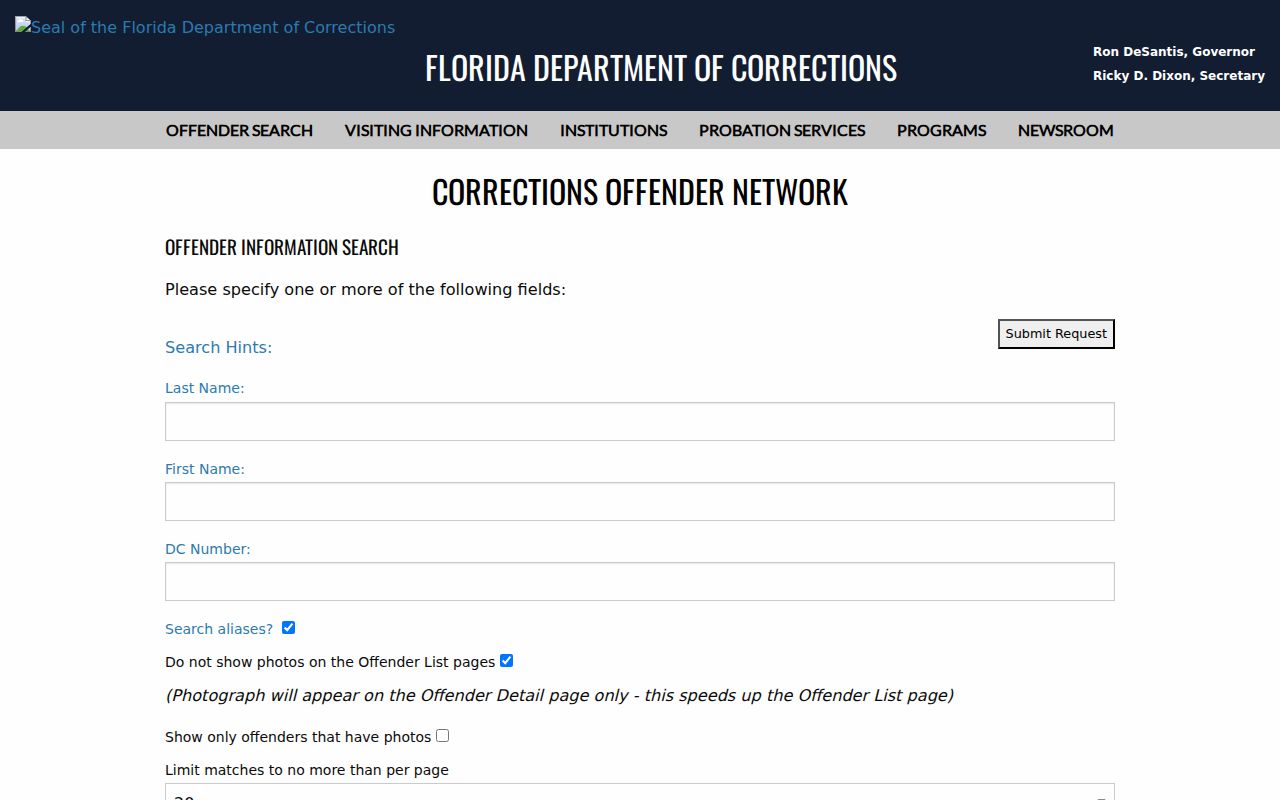
FDC does not cover an ordinary pretrial stay at the Brevard jail, and parole is not a generic label for every form of release. Federal Brevard prosecutions belong to the Middle District of Florida, not BECA.
The federal docket route is PACER, which requires its own account and applies the federal judiciary's access rules.
For a person's own nationwide fingerprint history, the FBI electronic Departmental Order portal supports Identity History Summary requests.
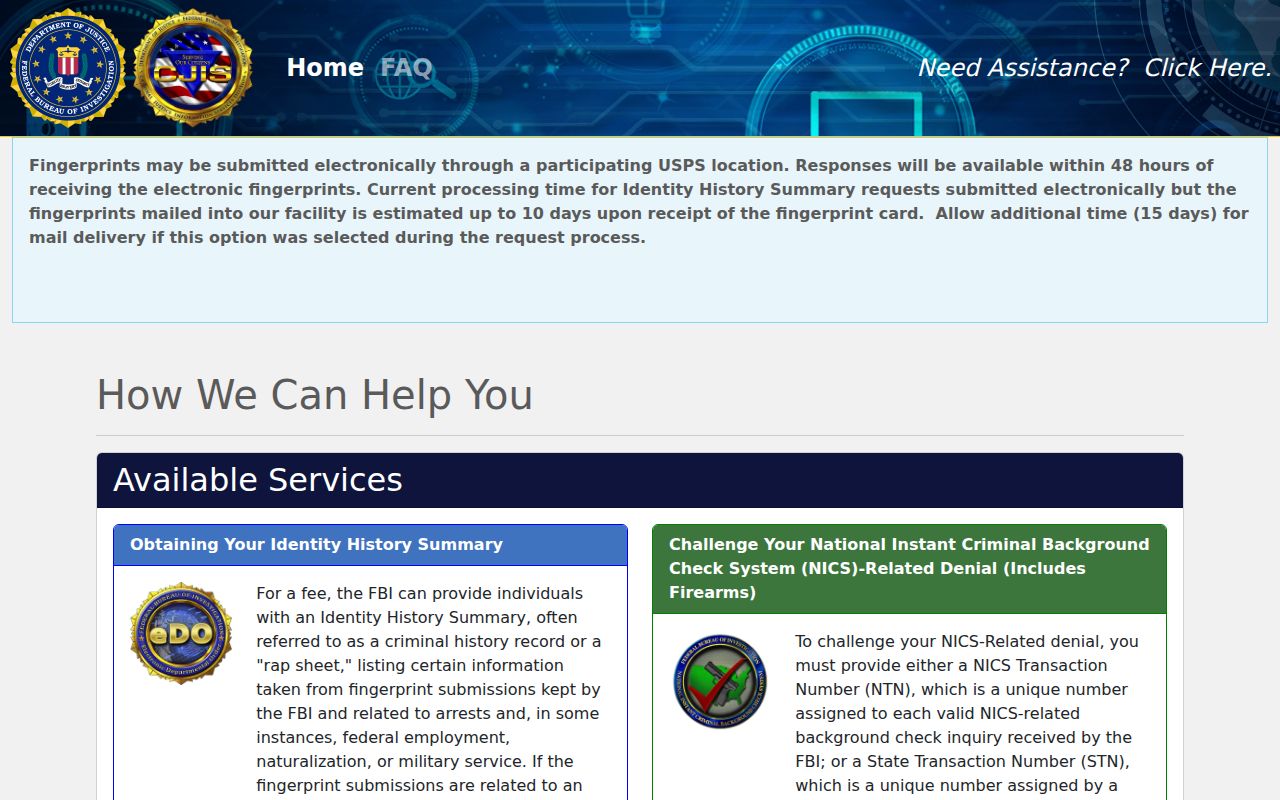
That FBI process is subject-only and should not be confused with a public name lookup.
Brevard County Criminal Records by City
Palm Bay, Melbourne, and Titusville police departments keep their own incident and arrest narratives, but none operates a separate municipal criminal court. City-origin misdemeanors, ordinance prosecutions, and criminal traffic cases proceed through Brevard County Court; felonies proceed through Circuit Court. BECA supplies the resulting court docket, while a person entering county custody appears through BCSO. That chain means a complete city search can require the city police report, the county booking record, and the Clerk case.
Palm Bay Criminal Records
148,092 estimated residents · Palm Bay Police reports route to county court and jail systems.
Melbourne Criminal Records
87,097 estimated residents · Citizen Connect adds a generalized incident-awareness map.
Titusville Criminal Records
49,800 estimated residents · the county seat has its own Police Records Section and JustFOIA route.
Three Brevard Courthouses, One Clerk
Titusville remains the county seat, Viera hosts the modern Moore Justice Center, and Melbourne serves the southern part of Brevard. Those locations do not create three unrelated court databases: the Clerk maintains the case system across the county. Use the Clerk office directory to verify the right branch and service before visiting.
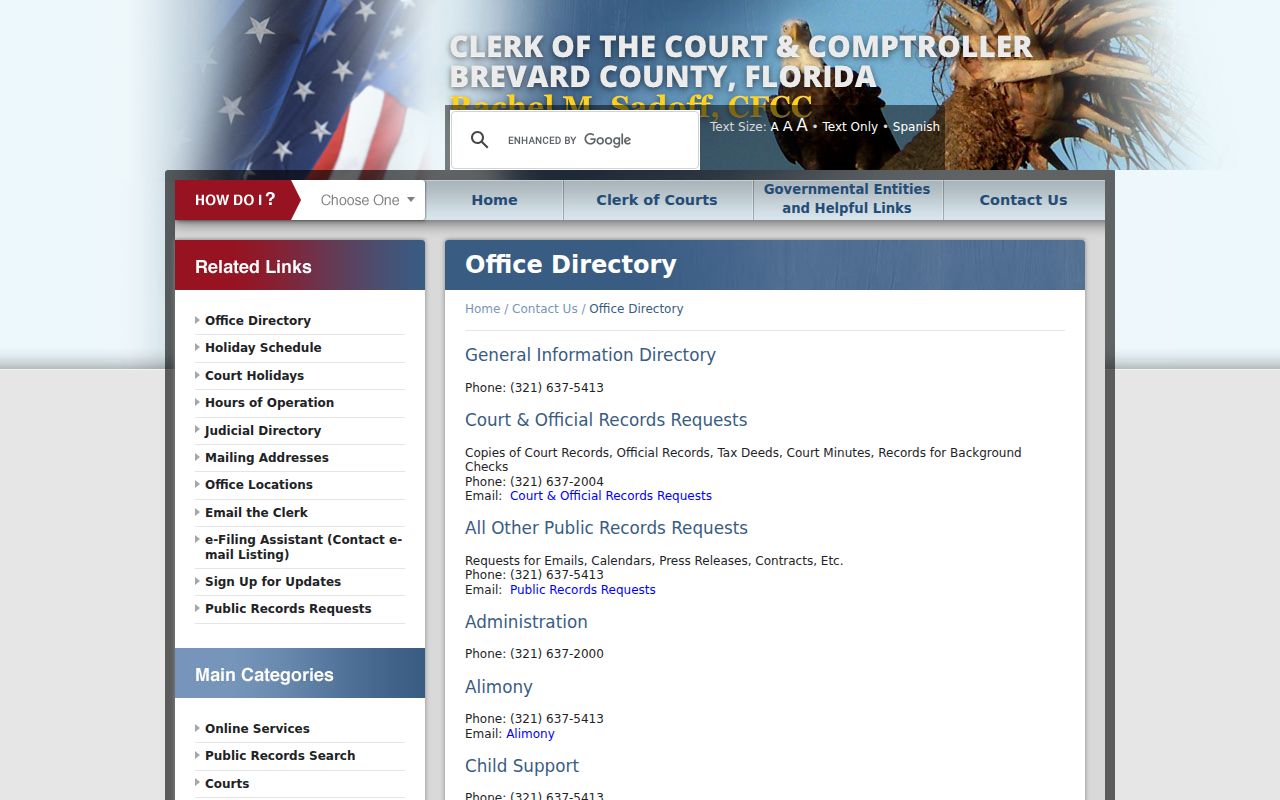
The distinction matters most for physical files, secured evidence, certified copies, and scheduled proceedings. The Clerk requires advance arrangements for some evidence inspection, while law-enforcement reports and dash-camera footage stay with the sheriff or originating police agency. Digital court recordings belong with the Eighteenth Judicial Circuit, and prosecution discovery belongs with the State Attorney.